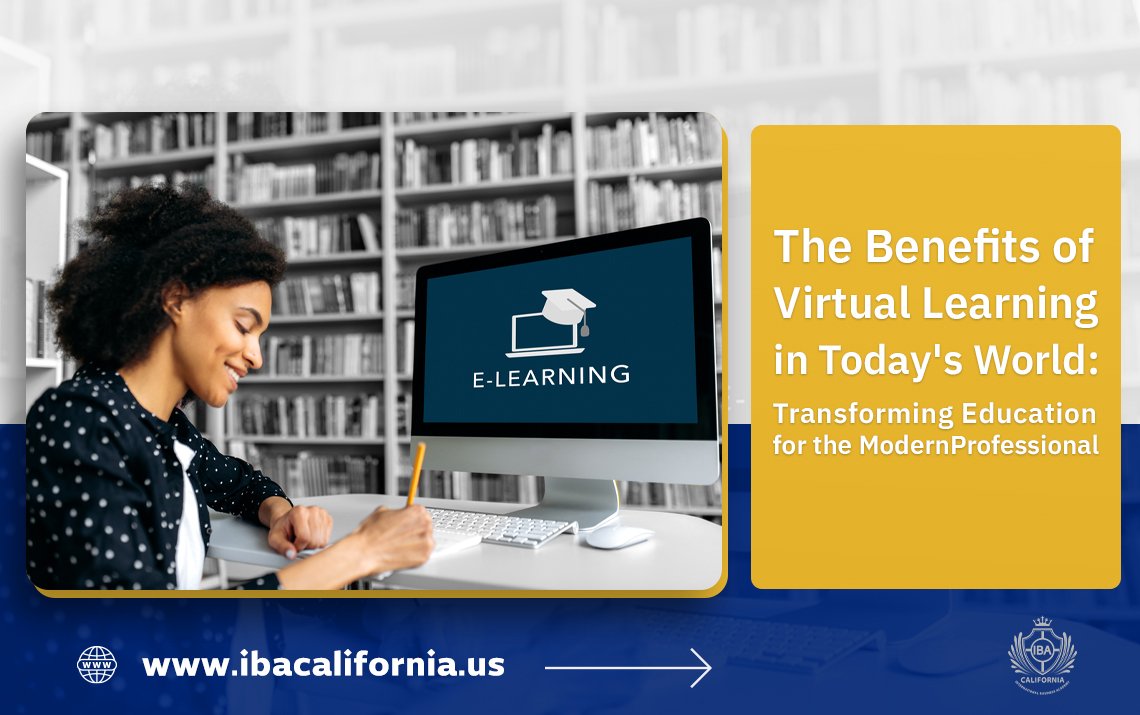
The Benefits of Virtual Learning in Today’s World: Transforming Education for the Modern Professional
The Benefits of Virtual Learning in Today's World: Transforming Education for the Modern Professional
Education has undergone a remarkable transformation over the past two decades. Advances in digital technology, widespread internet access, and evolving workplace expectations have changed how people learn, collaborate, and develop professionally. Today, virtual learning is no longer viewed as an alternative to traditional education—it has become a central component of higher education and lifelong learning.
For working professionals, entrepreneurs, and aspiring leaders, virtual learning offers an opportunity to pursue academic and professional goals without sacrificing career progression or personal responsibilities. It provides flexibility, accessibility, and a learning experience that reflects the realities of today’s digital world.
At IBA California, we recognize that education should adapt to the needs of modern learners. Our online programs are designed to combine academic rigor with the convenience of flexible study, enabling students from around the world to develop advanced business knowledge while balancing work, family, and other commitments.
The Evolution of Learning
Education has traditionally been associated with physical classrooms, fixed schedules, and campus-based instruction. While these models continue to play an important role, technological innovation has expanded the possibilities for delivering high-quality education.
Virtual learning uses digital platforms to provide access to lectures, learning resources, discussions, assessments, and academic support regardless of a student’s location. This approach allows learners to participate in meaningful educational experiences while overcoming many of the geographical and scheduling barriers associated with traditional study.
As businesses increasingly embrace digital tools, remote collaboration, and cloud-based technologies, online education reflects the environments in which many professionals already work.
Flexibility That Supports Modern Lifestyles
One of the most significant advantages of virtual learning is flexibility.
Many students pursuing graduate education are balancing demanding careers, family responsibilities, business ownership, or community commitments. Attending classes at fixed times on a physical campus may not always be practical.
Virtual learning enables students to organize their studies around their existing responsibilities. Depending on the structure of the program, learners may be able to access course materials, complete assignments, and participate in discussions at times that best suit their schedules.
This flexibility allows professionals to continue developing their knowledge without interrupting their careers, making education more accessible to individuals at different stages of life and work.
Learning Without Geographic Boundaries
One of the defining strengths of virtual education is its ability to connect learners across borders.
Students are no longer limited to institutions located within commuting distance. Instead, they can access programs offered by institutions in other cities, states, or countries, opening doors to educational opportunities that may not be available locally.
For international students, this means the opportunity to engage with global perspectives, learn from experienced faculty, and collaborate with classmates from diverse professional and cultural backgrounds—all without the need to relocate.
This global accessibility enriches the learning experience and helps students develop the cross-cultural understanding that is increasingly valuable in today’s interconnected business environment.
Supporting Lifelong Learning
The pace of technological and economic change means that learning can no longer end with a single degree or qualification.
Professionals today are expected to update their knowledge continuously as industries evolve, new technologies emerge, and organizational priorities shift.
Virtual learning supports lifelong education by making it easier for individuals to pursue additional qualifications, professional development courses, and advanced degrees throughout their careers.
Whether someone is seeking to move into leadership, change industries, or deepen expertise in a specialized area, online learning provides a practical pathway for continuous growth.
Developing Digital Skills for the Workplace
Participating in online education naturally strengthens many of the digital competencies required in modern organizations.
Students regularly use learning management systems, digital collaboration tools, video conferencing platforms, online research databases, and cloud-based applications. These experiences help build confidence in working with technology while reinforcing essential workplace skills.
Virtual learning also encourages students to develop:
- Digital communication skills
- Online collaboration
- Information literacy
- Time management
- Independent learning
- Virtual presentation skills
- Problem-solving in digital environments
These competencies complement academic knowledge and prepare graduates for increasingly technology-driven workplaces.
Encouraging Independent and Self-Directed Learning
Successful online learners develop strong habits of responsibility and self-motivation.
Without the structure of daily classroom attendance, students learn to manage their schedules, set priorities, meet deadlines, and monitor their own progress.
These habits are highly transferable to professional environments, where initiative, accountability, and effective time management are essential qualities.
Virtual learning encourages students to become active participants in their education rather than passive recipients of information.
This independence fosters confidence and supports long-term professional success.
Access to Diverse Learning Resources
Digital education provides access to a wide range of learning materials beyond traditional textbooks.
Students may benefit from resources such as:
- Electronic libraries
- Academic journals
- Multimedia lectures
- Interactive case studies
- Recorded presentations
- Research databases
- Discussion forums
- Digital simulations
Because many of these resources are available online, students can revisit lectures, review materials, and explore additional content to reinforce their understanding.
This flexibility supports different learning styles and allows students to study at a pace that promotes deeper comprehension.
Collaboration in a Virtual Environment
Although virtual learning is often associated with independent study, effective online programs place significant emphasis on collaboration.
Students engage with faculty members and classmates through discussion forums, group projects, virtual meetings, and collaborative assignments.
Working with peers from different industries and countries exposes students to diverse perspectives and experiences, enriching discussions and broadening understanding of global business practices.
These collaborative experiences mirror the reality of many organizations, where teams frequently work across locations and time zones using digital communication tools.
Cost and Time Efficiency
Virtual learning can also reduce some of the indirect costs associated with traditional education.
Students may save time and expenses related to:
- Daily commuting
- Relocation
- Campus housing
- Printed learning materials
- Travel to and from classes
For working professionals, the ability to remain employed while pursuing graduate education can also reduce the financial impact of continuing studies.
The time saved through online learning can often be redirected toward professional development, family responsibilities, or personal well-being.
Preparing Students for a Digital Economy
Businesses around the world continue to embrace digital transformation.
Remote work, cloud computing, artificial intelligence, data analytics, and virtual collaboration have become integral parts of modern organizational operations.
Graduates entering today’s workforce benefit from learning in environments that reflect these realities.
Virtual education helps students become comfortable navigating digital platforms, collaborating remotely, and managing projects in technology-enabled settings.
These experiences contribute to workplace readiness and support career advancement across a wide range of industries.
Personalized Learning Experiences
Online education often enables students to take greater ownership of their learning journey.
Because many digital resources remain accessible throughout a course, students can spend additional time reviewing complex topics or exploring areas of particular interest.
This flexibility allows learners to progress in ways that align with their individual strengths, goals, and professional needs.
Faculty members can also provide timely feedback through digital platforms, supporting continuous improvement and academic development.
Building Global Professional Networks
Virtual classrooms bring together professionals from diverse industries, sectors, and countries.
Students may interact with managers, entrepreneurs, educators, consultants, healthcare professionals, engineers, and executives from around the world.
These connections create opportunities for exchanging ideas, sharing experiences, and developing valuable professional relationships.
A diverse learning community enhances understanding of international business practices and prepares graduates to work effectively in multicultural environments.
Virtual Learning and Leadership Development
Leadership development is not limited to face-to-face interactions.
Online graduate programs encourage students to strengthen communication, strategic thinking, problem-solving, and decision-making while collaborating in virtual environments.
As organizations increasingly operate with distributed teams, leaders must be able to motivate employees, facilitate discussions, and manage projects remotely.
Virtual learning provides practical experience in these forms of communication and collaboration, helping students develop leadership skills that are directly applicable in contemporary workplaces.
Quality and Academic Standards
The effectiveness of virtual learning depends on thoughtful program design, qualified faculty, meaningful student engagement, and robust academic support.
High-quality online education maintains clear learning outcomes, structured assessments, academic integrity, and accessible student services. Technology serves as a tool to enhance learning rather than replace sound educational practices.
When these elements are combined, virtual learning can provide an engaging and academically rigorous experience that supports meaningful educational achievement.
Looking Ahead
Technology will continue to influence how people learn throughout their lives. Advances in artificial intelligence, adaptive learning platforms, immersive technologies, and digital collaboration tools are creating new opportunities to personalize education and expand access to knowledge.
At the same time, the core purpose of education remains unchanged: to develop knowledge, critical thinking, ethical judgment, and the ability to contribute positively to organizations and society.
Virtual learning is well positioned to support these goals by providing flexible, accessible, and innovative educational experiences that meet the needs of today’s learners and tomorrow’s leaders.
Conclusion
Virtual learning has become an essential part of modern education because it aligns with the realities of today’s connected world. It offers flexibility for working professionals, expands access to quality education across geographic boundaries, encourages lifelong learning, and helps students develop the digital competencies needed in contemporary workplaces.
Beyond convenience, online education fosters independence, collaboration, and global engagement while preparing learners to thrive in increasingly technology-driven organizations. As industries continue to evolve, the ability to learn effectively in digital environments will remain a valuable professional asset.
At IBA California, we are committed to providing an online learning experience that combines academic excellence with practical relevance. Through flexible, student-centered graduate programs, we aim to equip professionals with the knowledge, leadership skills, and confidence to succeed in an ever-changing global business landscape. Virtual learning is more than a method of education—it is a pathway to continuous growth, professional achievement, and lifelong success.